
Two millimetres is about the thickness of a coin. On a steel member several metres long, holding to it can look fussy. It stops looking fussy when you follow a fabricated part to site and find that it either goes into place or does not. Mavenshell works to a tolerance of up to 2 mm on fabricated steel for this reason.
Fit-up comes first
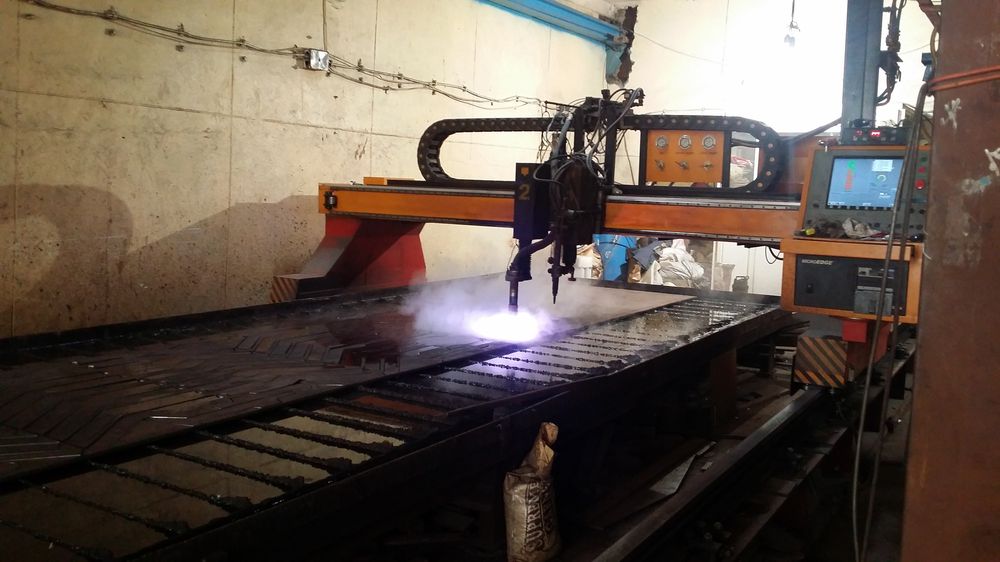
Fit-up is the stage where parts are positioned and held together before welding. If the parts are cut accurately and the joint gaps are even, the weld is sound and uses the right amount of metal. If parts are out, the welder either has to force the joint or fill a large gap, and both create weak spots. Laser-cut components help because edges, holes and profiles start out accurate and repeatable.
Distortion and welding sequence
Welding heats steel locally, and when it cools it shrinks and pulls on the surrounding metal. A long member can bow, a plate can buckle and a frame can go out of square. Fabricators manage this by planning the welding sequence, balancing welds on both sides of a part, using jigs and fixtures to hold the shape and avoiding more weld than the design needs. After welding the part is measured, and straightened where needed.
Matching parts on site
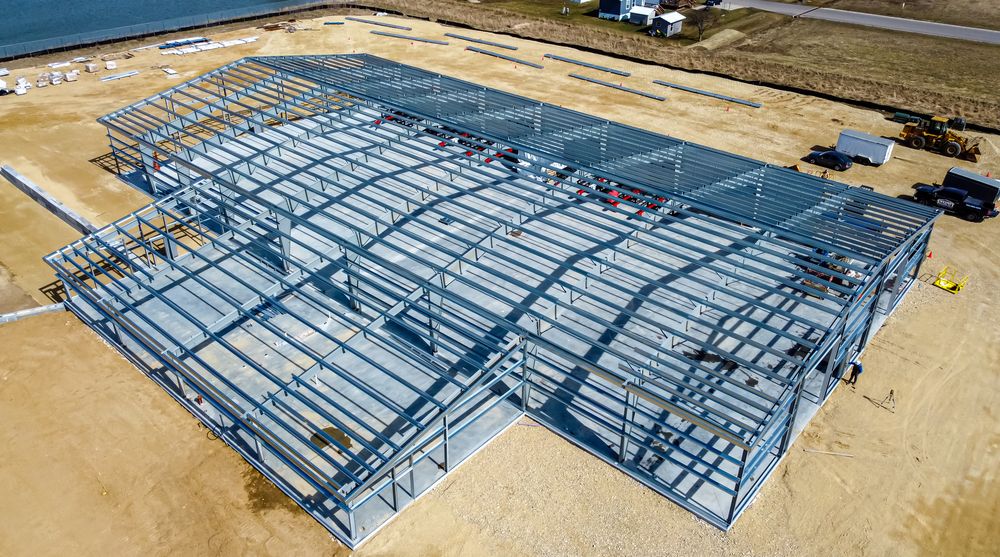
Steel structures are often made in several workshops or bays and joined on site with bolted connections. Bolt holes only line up when the hole positions and member lengths are accurate. A part that is out by a few millimetres may need drilling, reaming or cutting on site, which is slower and harder to do well than in a workshop.
Inspection stages
Quality is checked in steps rather than once at the end. A common approach has three stages:
- Incoming material and cutting: the steel grade, such as IS 2062 structural steel, and the dimensions of cut parts are confirmed against the drawing.
- Fit-up and welding: joint gaps, alignment and weld quality are checked before the part moves on.
- Final inspection: overall dimensions, hole positions, surface finish and marking are verified before dispatch.
Mavenshell inspects at three stages under IS/IEC practice. Weld checks can be visual and, where the job needs it, include further testing methods agreed with the customer.
What this means for a project
Accurate fabrication shortens erection, because parts go together as designed and fewer fixes are needed on site. It also leaves a clear record of what was checked and when. If you want to know how a fabrication job runs from drawing to dispatch, our heavy fabrication page explains our process, from CAD drawings to site assembly.
Let's build industrial growth together. Mavenshell fabricates, transports and installs, with inspection at three stages.